


 English
 Español
 русский
 عربى
 中文简体


أخبار الصناعة
Jumper Knitting Machine Buyer's Guide: Systems, Gauges & Production Selection
التاريخ:Sep 23, 2026
محتوى
Search for "jumper knitting machine" and most results are written for hobby knitters: how to thread a domestic machine, how to move the carriage by hand, where to find secondhand patterns. That advice is fine if you knit one jumper at a time. It is far less useful if you run a factory that needs to turn out thousands of jumpers a month at consistent quality and predictable cost.
This guide comes from the other side of the fence. We build computerized flat knitting machines in Changshu, one of China's textile machinery clusters, and most of our working days are spent discussing needle beds, gauges, systems and takedown tension with sweater producers. Here is what genuinely matters when you are choosing a jumper knitting machine for production.
What Exactly Is a Jumper Knitting Machine?
A jumper knitting machine is a flat-bed knitting machine set up to make sweater panels, sweater-shaped pieces or complete garments. In British usage, "jumper" simply means a pullover, so the term covers the same equipment that North American buyers call a sweater knitting machine. In practice the market splits into three tiers.
- Domestic and hand-flat machines — small, manually driven or lightly motorized, built for one-off and sample work.
- Semi-industrial machines — motor-driven with simple electronic patterning, still heavily dependent on the operator.
- Industrial computerized flat knitting machines — programmable control, motorized carriages, multiple yarn feeders, automatic takedown and needle-by-needle selection.
Almost all commercial sweater production happens in the third tier, and the reason is arithmetic rather than prestige. A well-configured industrial machine completes a sweater panel in minutes instead of hours, and it repeats that result identically for the next thousand panels.
How a Computerized Jumper Knitting Machine Builds a Garment
Mechanically, a flat knitting machine is a simple idea. Yarn passes through carriers to a row of needles held in a horizontal bed. As the carriage traverses, each selected needle catches yarn, forms a new loop and casts off the previous one, while takedown rollers keep the growing fabric under even tension.
The word that changes everything is "computerized". Instead of a punch card or a chain of mechanical selectors, a control system decides which needles knit, tuck, miss or hold, and that decision can change on every single course. One machine can knit a ribbed hem, a jacquard body panel and a shaped armhole without manual intervention.
Why Bottom-Up Became the Standard
Most sweater production runs bottom-up: knitting starts at the hem and works upward to the shoulder, adding or dropping needles at the sides to shape the panel. It reduces yarn waste, shortens finishing and gives a more even stitch appearance at the hem. Two refinements are worth knowing. Compound-needle machines improve stitch-transfer reliability at fine gauges, which matters with delicate yarns. No-waste-yarn machines are configured to minimize the yarn left at the start and end of each panel, a direct saving on material cost once volumes rise.
Panels, Fully Fashioned, or Ready-to-Wear
Some producers knit flat panels and sew them together. Others knit fully fashioned pieces whose edges already carry the shaping. A third group knits ready-to-wear garments in one continuous sequence, closing shoulders and sides on the machine itself, which removes a large share of the sewing operation and the labour attached to it, but only if the machine was designed for that workflow from the start.
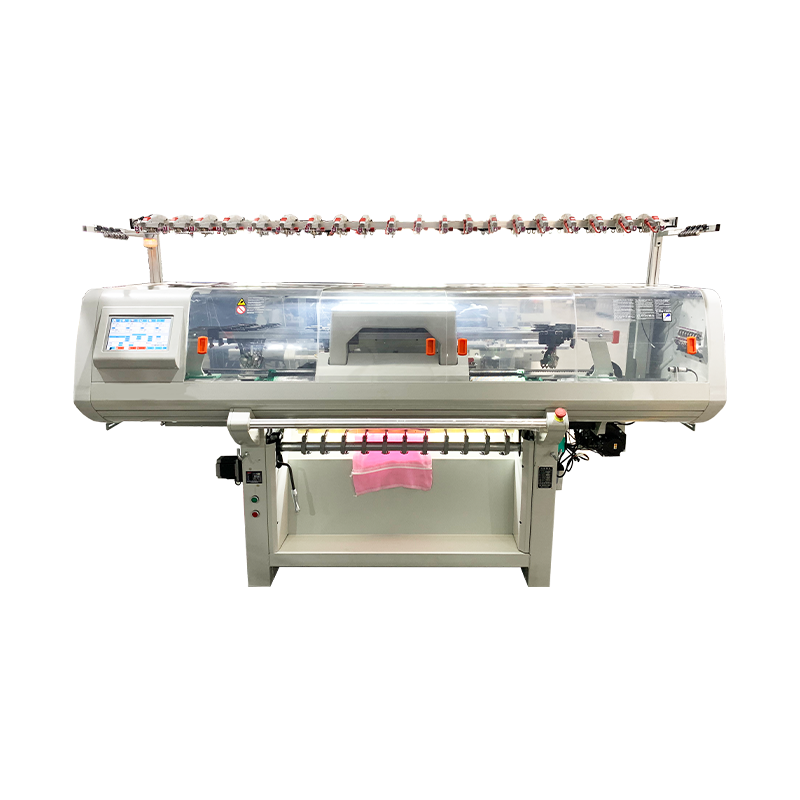
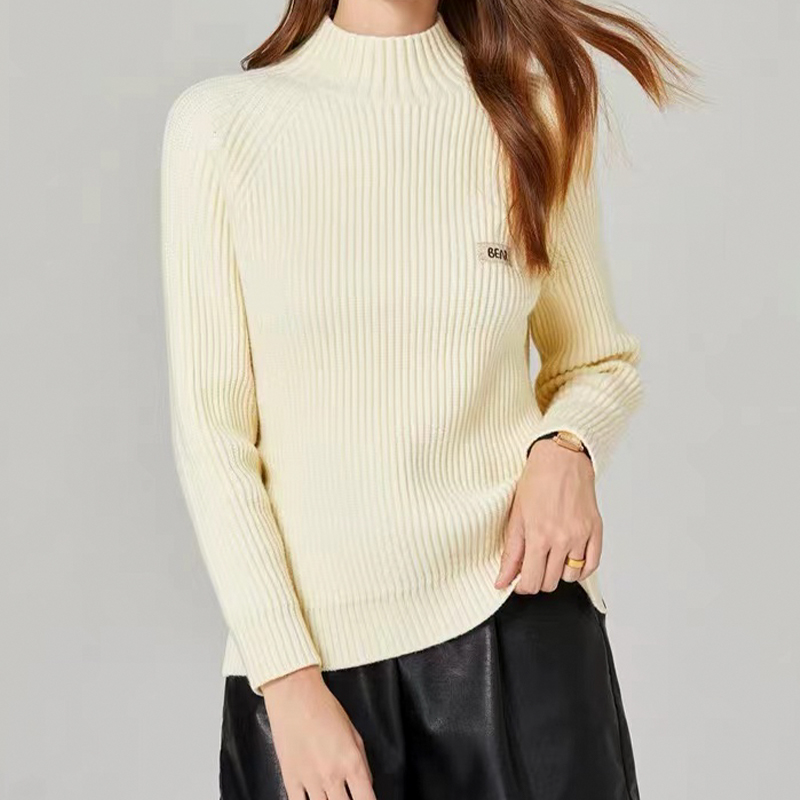 GS-RW372 10.2G 72-Inch Three System Ready-to-Wear Computerized Flat Knitting MachineProduct IntroductionView Product →
Specifications That Decide Your Output
Four numbers on a specification sheet do more to determine factory output than any marketing claim: systems, gauge, working width and needle type. The table below summarises the ranges you will meet across a typical industrial range.
| Specification | Typical Range | What It Decides |
|---|---|---|
| Systems | 1 to 4 | Courses per carriage pass and output per hour |
| Gauge | 3G to 14G | Yarn count, stitch fineness and fabric weight |
| Working width | 36 to 100 inches | Panel size and how many panels fit per pass |
| Needle type | Latch or compound | Stitch-transfer reliability, especially at fine gauges |
| Yarn feeders | 2 to 8 or more | Colours and stripe sequences without stopping |
| Control system | Electronic and programmable | Patterning, style storage and changeover speed |
Matching the Machine to the Jumpers You Actually Sell
Buying the most capable machine on the market is not the same as buying the right one. Three rules of thumb help.
Gauge Follows Yarn
Work backwards from your yarn. A fine 12G machine suits light merino and cotton where stitch definition matters; a 5G or 7G machine suits chunky lambswool and heavy outdoor knitwear. Matching a fine-gauge machine to a chunky product line produces fabric that looks loose and unstable.
Systems Follow Volume
Each extra system adds productive courses per carriage traverse. A three-system machine out-produces a two-system machine of the same gauge and width, but it costs more and draws more power. If your order book is dominated by ribs and simple jacquards, a well-built two-system machine often gives the better return.
Width Follows Your Panel
A 52-inch bed covers the great majority of adult sweater panels, including larger sizes. Wider beds of 72 inches and beyond suit wide panels, multiple panels knitted side by side, or blanket-type products sharing the same floor.
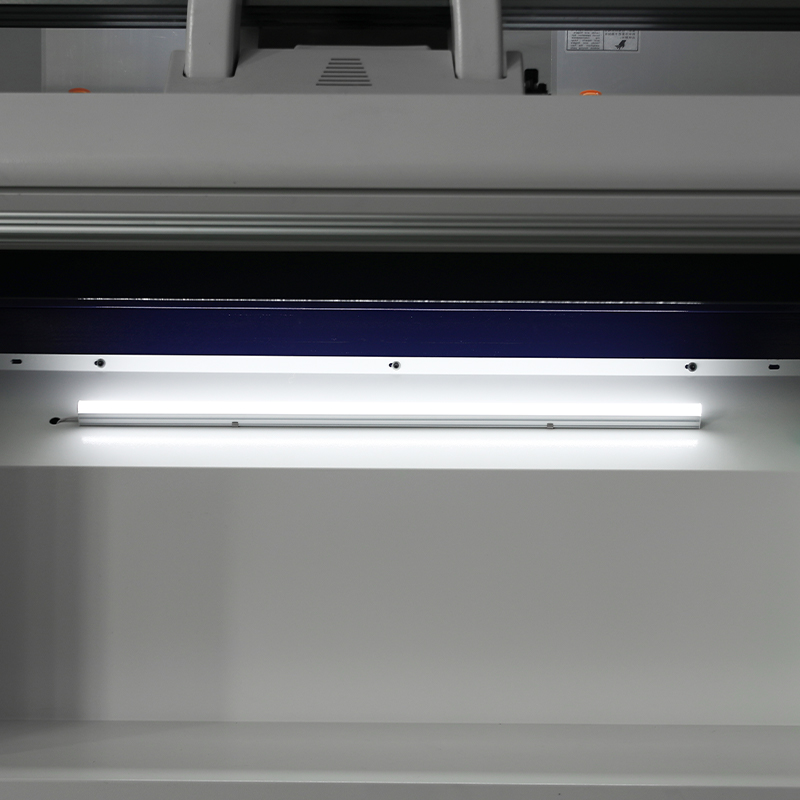 GS-S352 52-Inch Three System Sweater Knitting MachineProduct IntroductionView Product →
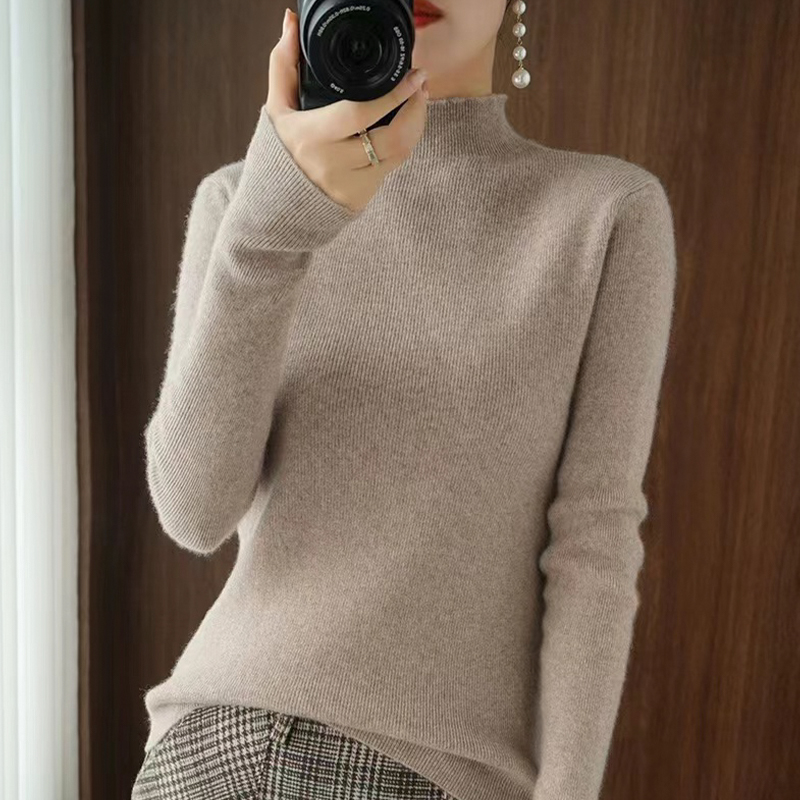 GS-SE252 12G 52-inch Economic-Double System Sweater Knitting MachineProduct IntroductionView Product →
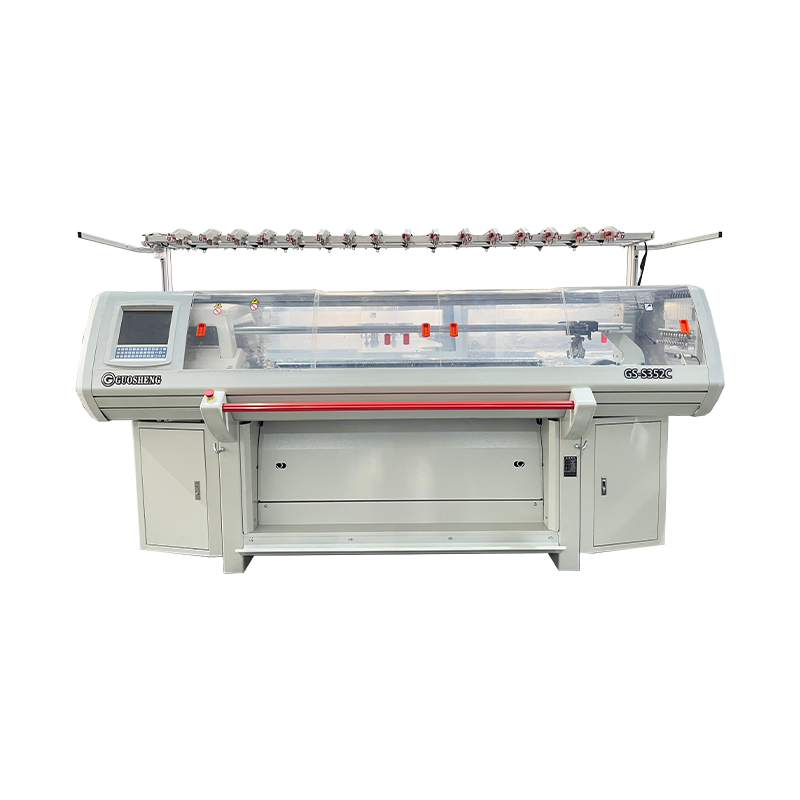
In our own range that split shows up clearly. The full-function S series covers two, three and four systems with compound-needle, no-waste-yarn and intelligent yarn-feeder variants for demanding styles, while the economic SE series concentrates on single and double system machines for straightforward volume production.
A Practical Selection Checklist
- Fix your yarn and target gauge before you talk to any supplier.
- Estimate output in panels per shift, then convert it to courses per minute.
- Decide whether you will sew panels or knit ready-to-wear garments.
- Confirm the working width covers your largest panel with margin to spare.
- List the patterning you need: jacquard colours, ribs, cables, intarsia.
- Ask for a trial with your own yarn and inspect the finished panel, not a showroom sample.
- Check installation, operator training, spare parts and service response before signing.
If you are still weighing the capital case, our analysis of what makes a computerized sweater knitting machine worth the investment looks at the numbers in more detail.
Installation, Training and Long-Term Support
A knitting machine is a production asset with a working life measured in years, so the purchase decision does not end at the loading dock. Ask how the machine will be installed and commissioned, who trains your operators on the control system, how spare needles and carriages are supplied, and how quickly a technical question gets answered during peak season. Manufacturers with overseas service offices and a documented installation and commissioning process remove a great deal of risk from a first or second machine purchase. If you want to discuss a specific jumper programme with our engineers, get in touch with our team and we will work through the specification with you.
Choosing a jumper knitting machine is ultimately a question of fit rather than size. Decide what you knit, in which yarn, at what gauge and in what volume; then let the number of systems, the bed width and the needle type follow from those answers. Machines specified that way tend to stay productive for years, while machines bought on headline capability alone often end up running the same simple styles that a cheaper alternative would have handled just as well.
If you would like a second opinion on a specification before you commit, we are always happy to talk it through.



هل أنت مستعد للبدء؟
فئات المنتجات
- آلة حياكة السترات (النسخة الاقتصادية SE)
- آلة حياكة السترات وظيفة كاملة S)
- آلة حياكة الياقات (EC الاقتصادية) (القماش)
- آلة حياكة الياقات (الوظيفة الكاملة C)
- آلة حياكة البطانيات (القماش)
- آلة حياكة الجزء العلوي من الحذاء
- آلة حياكة السترات الجاهزة للارتداء
- آلة حياكة القفازات الجاهزة للارتداء
- آلة حياكة القبعات الجاهزة للارتداء
- آلة حياكة وسادة الركبة
- آلة حياكة الشبكة المعدنية
معلومات الاتصال
-
 البريد الإلكتروني: gs@guoshengchina.cn
-
 الهاتف: +86-0512-52690511
-
 العنوان: NO. 18، طريق هوبو بوجيانغ، منطقة بيكسي الجديدة، مدينة تشانغشو، مقاطعة جيانغسو، الصين
رمز الاستجابة السريعة
حقوق الطبع والنشر © Guosheng Wonderful Intelligent Technology (Changshu) Co., Ltd. جميع الحقوق محجوز
